
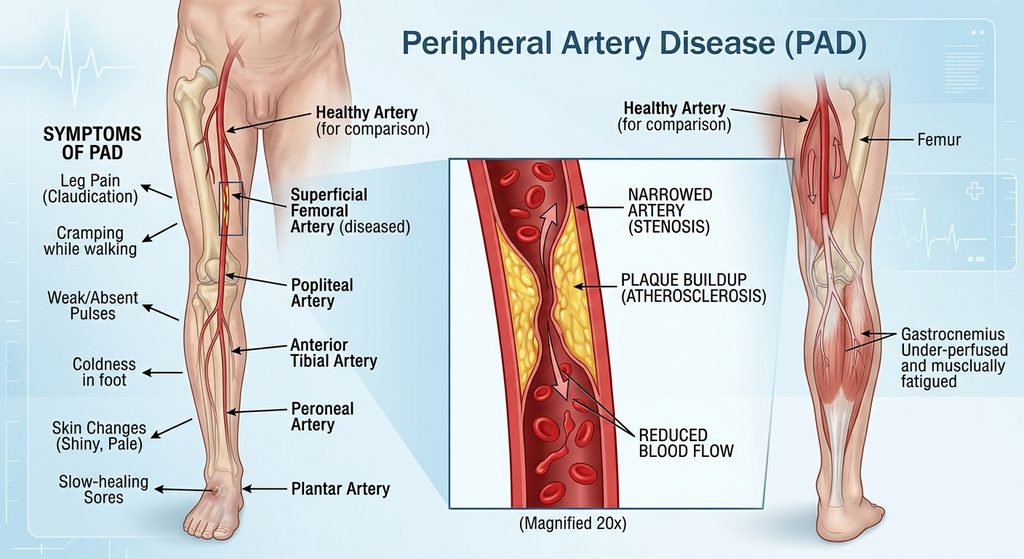
“Pain in the calves when walking,” “relief when resting,” and “cold or numb feet”—while these symptoms are often assumed to stem from the lower back, they could actually be signs of peripheral artery disease (PAD).
Leaving this condition unaddressed is dangerous; it can lead not only to ulcers or gangrene in the legs but also to an increased risk of heart attack or stroke.
What kind of condition is peripheral artery disease?
PAD (Peripheral Artery Disease) is a condition in which cholesterol accumulates inside the arteries, narrowing the passageway for blood flow.
Key risk factors include smoking, diabetes, high blood pressure, lipid abnormalities, and aging.
A typical symptom is intermittent claudication—pain that occurs after walking a certain distance and subsides with rest.
Be alert for signs such as one leg feeling cold, a change in skin color, or wounds that are slow to heal.
PAD is a reflection of systemic atherosclerosis; poor blood flow is not limited to the legs alone.
It is estimated that 30% of individuals with PAD also have atherosclerosis in their coronary (heart) arteries or carotid arteries.
Unlike sciatica, symptoms of PAD are influenced more by the distance walked than by body posture.
The condition worsens when walking uphill or walking briskly, and improves after resting for a few minutes.
How is it treated?
Early detection is key.
If the condition is suspected, it can be easily diagnosed using an ABI (ankle-brachial index) test or a vascular ultrasound.
Treatment primarily involves smoking cessation, strict management of blood pressure, blood sugar, and lipid levels, exercise therapy (such as walking), and the use of medications—most notably antiplatelet agents.
In severe cases, catheter-based procedures may be used to improve blood flow.
For exercise therapy, an effective approach is to walk until just before the onset of pain, rest, and then resume walking—repeating this cycle.
A diet low in salt and fat is also important.
If you experience any concerning symptoms, please consult a cardiologist as soon as possible.