
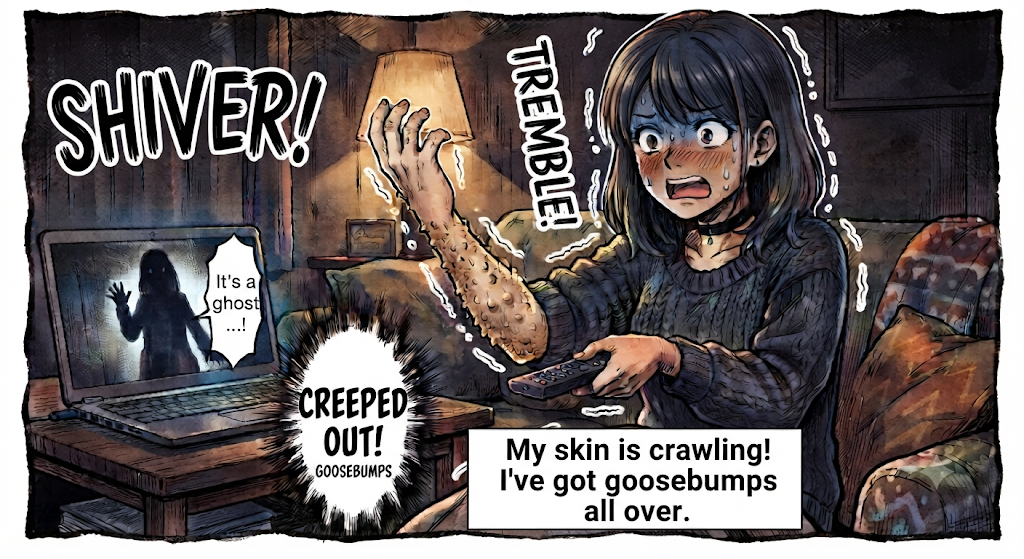
It is rare to find someone who has never experienced goosebumps.
However, few people are familiar with the actual mechanism behind them.
Our hair follicles contain tiny muscles known as arrector pili muscles.
When these muscles contract, the hair stands upright; simultaneously, the follicle rises and the surrounding skin is lifted, creating the bumpy appearance we recognize as goosebumps.
A key characteristic of these muscles is that they operate independently of conscious will, reacting instead to fluctuations in the sympathetic nervous system.
Goosebumps frequently appear when we are cold, as the low temperature stimulates the sympathetic nervous system.
The same reaction occurs when we feel fear.
This is a primitive response—similar to how animals bristle their fur in winter to trap a layer of air for warmth, or to make themselves look larger to predators—but since human body hair has largely atrophied, the reaction serves no practical purpose for us.
Some people also get goosebumps when listening to music. While the exact mechanism for this remains unclear, research shows that individuals prone to this reaction have a higher density of auditory nerve fibers and stronger neural connections within the brain’s auditory processing regions.