
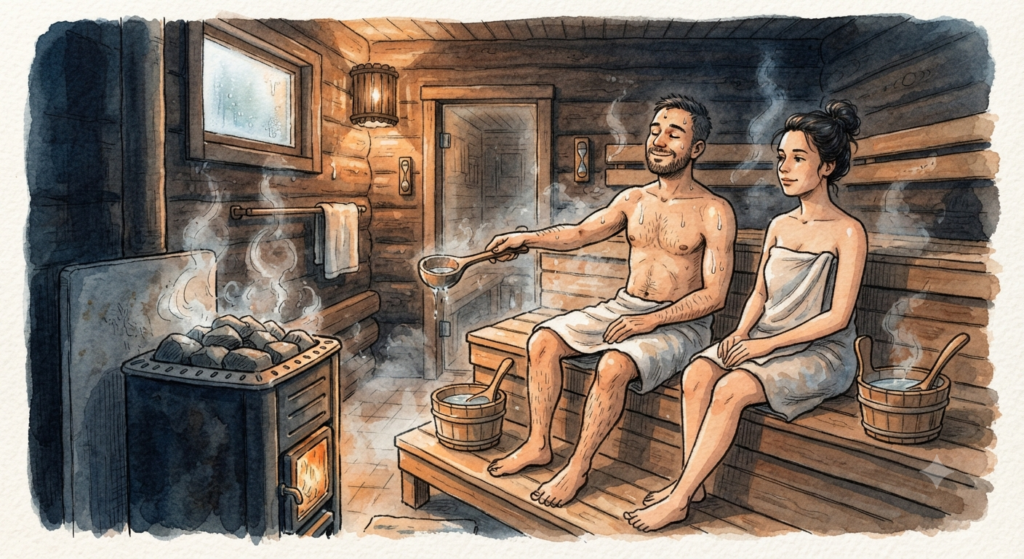
With the sauna boom of recent years, you may have heard enthusiasts use the term “totonou” (often translated as “being in the zone” or achieving a state of perfect equilibrium).
You might have a vague idea that it refers to the pleasant feeling experienced in a sauna, but do you know exactly what that state entails?
The sauna routine recommended by enthusiasts consists of three steps: the sauna itself, a cold water bath, and an outdoor air bath (resting in the open air).
The most significant factor across these three stages is the shift in the autonomic nervous system.
First, upon entering the sauna, the high temperature causes blood vessels to dilate, and the parasympathetic nervous system becomes dominant.
As the body heats up thoroughly, the sympathetic nervous system gradually takes over; this is the point at which the sauna session concludes.
Next, entering the cold water bath intensifies this effect, causing blood vessels to constrict.
Because the blood vessels constrict while the core body temperature remains high, only the surface of the body cools down.
When you then rest in the open air, the parasympathetic nervous system suddenly becomes dominant and blood vessels dilate, leading to a rapid improvement in blood flow throughout the entire body, including the surface.
The state known as “totonou” is defined by the sensation of blood rushing through the body, combined with the ultimate relaxation and trance-like feeling that arises from the wide swing between autonomic states, ultimately settling into parasympathetic dominance.
Ideally, this cycle is repeated about three times, but please be sure to pay close attention to your physical condition and blood pressure while doing so.