
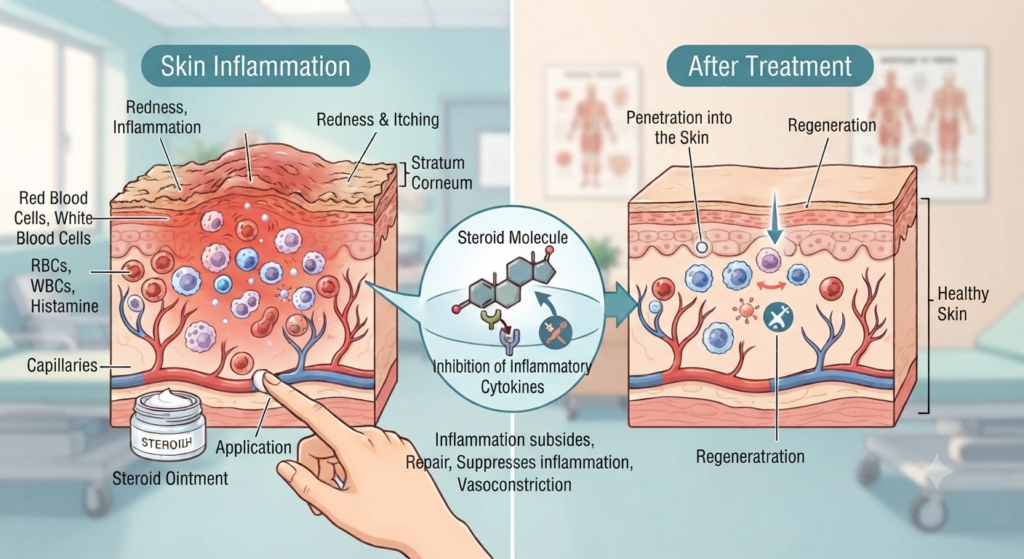
Topical steroids often have a reputation for being “scary drugs,” but when used correctly, they are very safe and effective treatments.
Side Effects of Steroids
Steroids generally fall into two categories: oral medications (taken by mouth) and topical medications (applied to the skin).
Long-term use of oral steroids can lead to side effects such as stomach ulcers, high blood pressure, osteoporosis, and an increased risk of infections.
In contrast, the main side effects associated with topical steroids include skin thinning (atrophy) and persistent redness caused by dilated blood vessels (telangiectasia).
However, these side effects typically result from improper use; there is no need for concern if the medication is used in the appropriate amount and duration as directed by a doctor.
Steroids: The “Water” That Quells Inflammation
If skin inflammation is likened to a “fire,” steroids act like the “water that extinguishes the flames.”
For instance, if the inflammation is severe and widespread—much like a forest fire—it is necessary to use a potent steroid in sufficient quantities to thoroughly bring the fire under control.
Why Stopping Abruptly Can Lead to Relapse
Suddenly stopping steroid use—even if symptoms have improved—can cause the inflammation to flare up again.
This happens because, even if the skin looks clear on the surface, inflammation may still be smoldering underneath.
To prevent relapse during the recovery phase, it is best to gradually taper off the medication—for example, by reducing the application frequency from twice to once a day or switching to a milder steroid.
In recent years, the range of treatment options for suppressing inflammation has expanded beyond topical steroids to include non-steroidal topical agents and biologics (injectable treatments).
It is important to consult with your doctor to select the optimal treatment based on your specific symptoms and physical constitution.